
The Sustainability Institute v. Trump (Sustainability Injunct 2)
The EPA is defying this Court's prior order because of an interpretation of the Act which this Court specifically rejected. - Order Enforcing Judgment, ECF 227 (July 22, 2026)
The court granted partial summary judgment to the plaintiffs on the ECJ Program. Judge Gergel held that the EPA's internal guidance terminating the program was arbitrary and capricious and unlawful under the APA, and vacated that guidance. The court found it had jurisdiction over the challenge to the agency guidance, following Justice Barrett's controlling concurrence in the Supreme Court's NIH decision, and rejected the government's argument that the One Big Beautiful Bill Act had mooted the case, noting the Act rescinded only funds that were unobligated when it passed. The court denied the plaintiffs' request for a permanent injunction ordering the EPA to rebuild and staff the program, calling that relief impractical, and left claims over individual terminated grants to the Court of Federal Claims.
After the plaintiffs moved to enforce the ruling, the court issued a clarification order. Judge Gergel held that the EPA must comply with its statutory obligation to administer the ECJ Program through September 30, 2026, and that the agency could not defy the prior order by re-arguing a reading of the statute the court had already rejected. The court's interpretation, he wrote, is the law of the case.
The government filed a notice of appeal to the Fourth Circuit challenging the June 11 and July 22 orders, together with an emergency motion to stay those orders pending appeal.
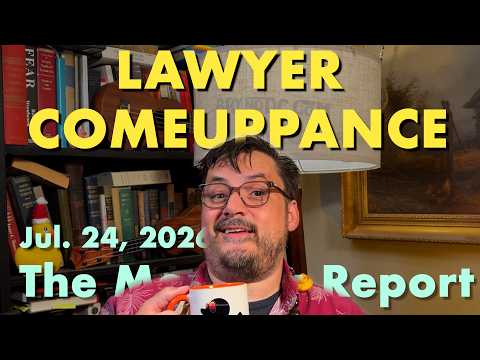
BrynoDC Coverage 1 video
Overview
Overview
11 community groups sued the Trump administration over the freezing of grants congressionally authorized in the Inflation Reduction Act and the Infrastructure Investment and Jobs Act.
The Facts
In 2022 the Inflation Reduction Act amended the Clean Air Act to create the Environmental and Climate Justice Block Grant Program, codified at 42 U.S.C. Section 7438, and appropriated $2.8 billion to remain available until September 30, 2026, directing that the Administrator "shall use" those funds to award grants.
In January 2025 President Trump issued two executive orders, Unleashing American Energy and Ending Radical and Wasteful DEI Programs, directing agencies to pause disbursement of Inflation Reduction Act funds and to terminate environmental-justice and equity-related grants. The Office of Management and Budget and the EPA issued memoranda pausing the funds, and on February 25, 2025 an EPA official decided to terminate the entire ECJ Program for policy reasons. The EPA marked the plaintiffs' grants terminated and sent boilerplate termination letters in July 2025.
The plaintiffs, a coalition of nonprofit organizations and local governments that had been awarded ECJ grants, sued under the Administrative Procedure Act, seeking to vacate the guidance that shut down the program rather than reinstatement of their individual grants.
The Issue
Issue
Whether the Trump administration had authority to freeze federal grants congressionally authorized and appropriated under the Inflation Reduction Act and the Infrastructure Investment and Jobs Act.
The Rules
Rule
The Executive may not impound or withhold congressionally appropriated funds absent express statutory authority or narrow emergency circumstances; agency actions must comply with the Administrative Procedure Act and cannot be arbitrary or capricious.
The Application
Analysis
Plaintiffs challenge the freeze as exceeding executive authority because Congress specifically authorized and appropriated these grant funds through statute, and the administration has not identified statutory language or a recognized emergency justifying withholding already-appropriated money.
The Conclusion
Conclusion
Case remains active; resolution turns on whether the freeze falls within executive emergency power or statutory authority, or conversely, constitutes an impermissible withholding of appropriated funds under appropriations law and the APA.
Flag an issue
This tracker is maintained by BrynoDC and is free because readers fund it. Support