
Newsom v. Trump (Nat Guard Fed 2025)
President Trump federalized the California National Guard under 10 U.S.C. Section 12406(3) and deployed troops to Los Angeles amid immigration-enforcement protests. Governor Newsom and the State of California sued, and Judge Breyer issued a temporary restraining order returning control of the Guard to the state.
The Ninth Circuit stayed Judge Breyer's order pending appeal, concluding that the President likely acted within his authority under Section 12406(3), which allows federalizing the Guard when the President is "unable with the regular forces to execute the laws." The court said it could review the invocation only for a colorable basis made in good faith. (Newsom v. Trump, 141 F.4th 1032 (9th Cir. 2025).)
The appeal remains fully briefed and pending before the Ninth Circuit, with the parties filing supplemental-authority letters. The companion Posse Comitatus appeal (No. 25-5553) has been held in abeyance awaiting this decision.
Legal Issues
BrynoDC Coverage 31 videos
 TikTok TikTok
  TikTok
 TikTok
  YouTube
  TikTok TikTok
  TikTok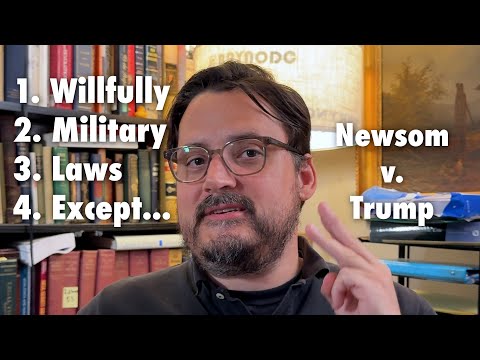
 TikTok
  TikTok TikTok TikTok

Overview
Overview
The government appealed Judge Breyer's order entering partial judgement for the plaintiffs on California's Posse Comitatus Act claims.
Overview
The United States appealed Judge Breyer's order granting a temporary restraining order which prevents the federalization of the California National Guard by President Trump.
The Facts
In June 2025, President Trump federalized the California National Guard under 10 U.S.C. Section 12406(3) and deployed troops to Los Angeles during protests over federal immigration enforcement. Governor Newsom and the State of California sued in the Northern District of California, and Judge Charles Breyer issued a temporary restraining order returning control of the Guard to the state, finding the President had not satisfied the statute's criteria. The government appealed and sought a stay.
The Issue
Issue
Whether the President has constitutional and statutory authority to federalize a state's National Guard without gubernatorial consent.
The Rules
Rule
The Posse Comitatus Act (18 U.S.C. § 1385) restricts federal military deployment in domestic law enforcement absent congressional authorization. States retain Tenth Amendment authority over their National Guard except when Congress invokes specific emergency powers under 10 U.S.C. § 333.
The Application
Analysis
Judge Breyer found that President Trump's attempted federalization of California's National Guard without Governor Newsom's consent likely violated federalism principles and statutory limits, granting a TRO to prevent the deployment.
The Conclusion
Conclusion
The district court's TRO preventing federalization remains in effect. The United States appealed to the Ninth Circuit, where the case is currently pending.
Flag an issue
This tracker is maintained by BrynoDC and is free because readers fund it. Support