
The Emoluments Debates
The Emoluments Clauses have almost no case law, so the founding-era records carry unusual weight. These are the pages where the clauses were proposed and explained, in the Framers’ own words. Read them for yourself.
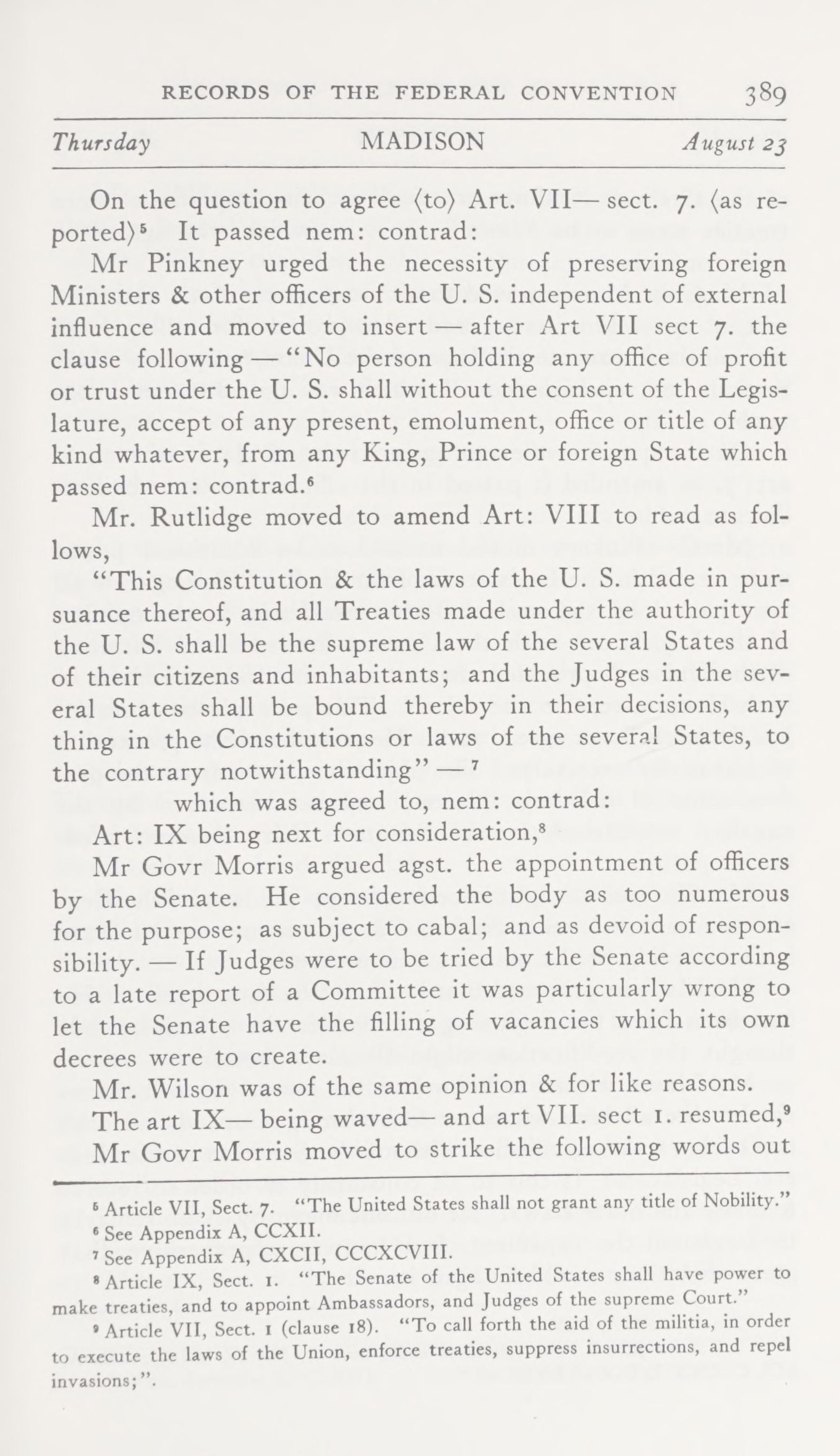
Charles Pinckney moves the clause "to preserve foreign Ministers & other officers of the U.S. independent of external influence." Madison records the exact text, which passes without objection.
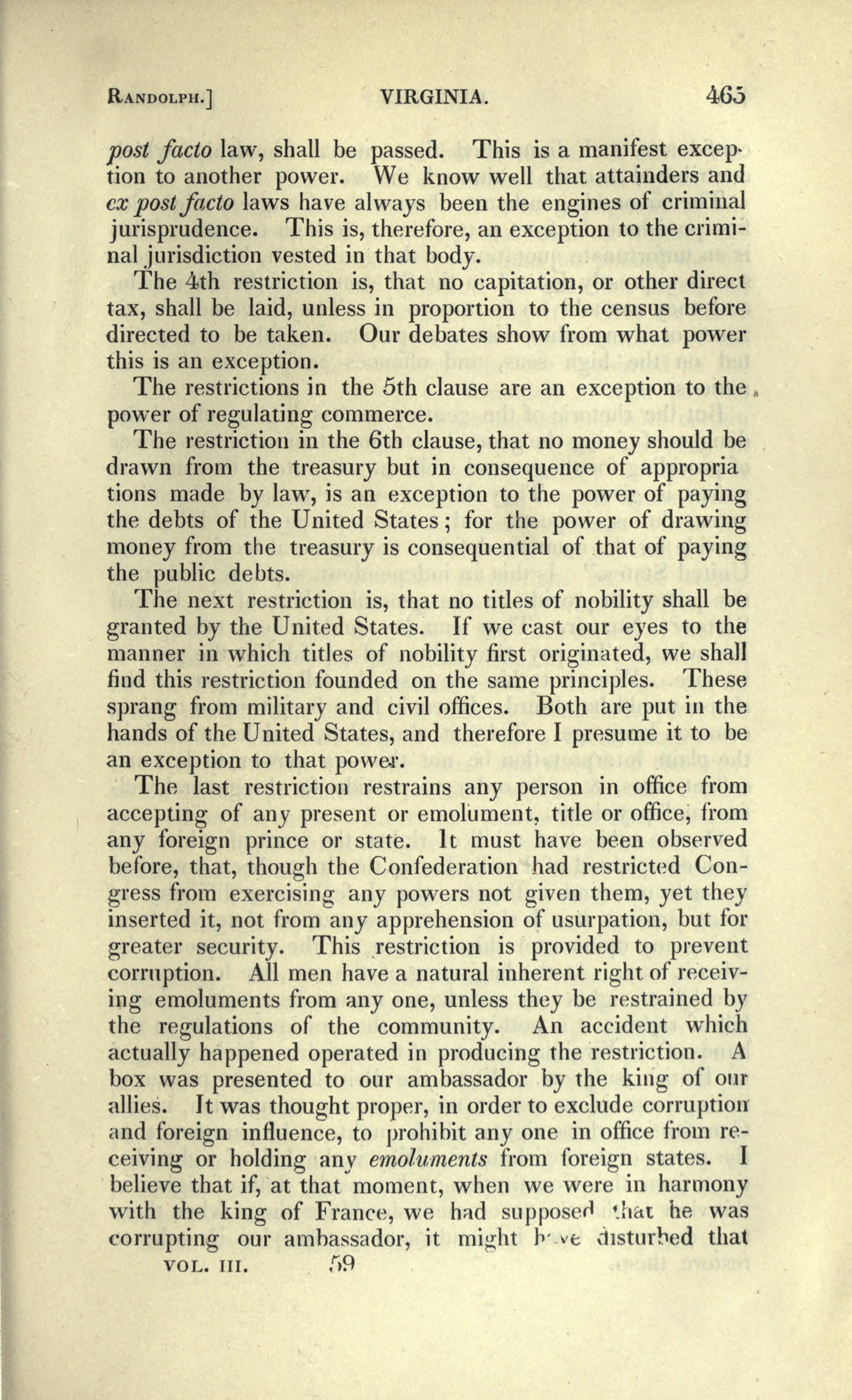
Edmund Randolph tells the convention the clause was "provided to prevent corruption," recalls the gift box a foreign king gave an American ambassador, and uses "emolument" broadly: "All men have a natural inherent right of receiving emoluments from any one."
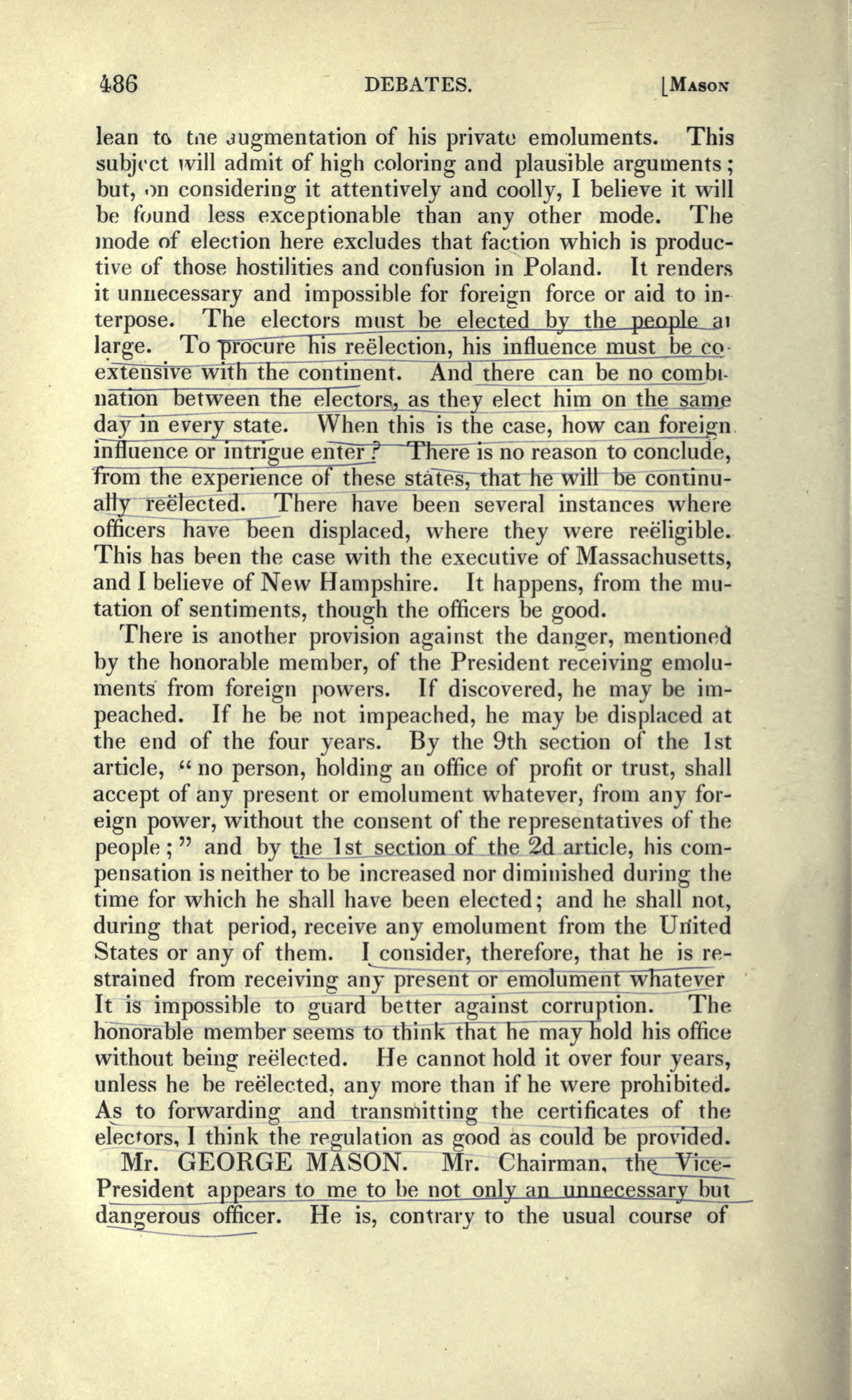
Randolph ties the protections directly to the President "receiving emoluments from foreign powers," quotes both clauses together, and concludes: "It is impossible to guard better against corruption."
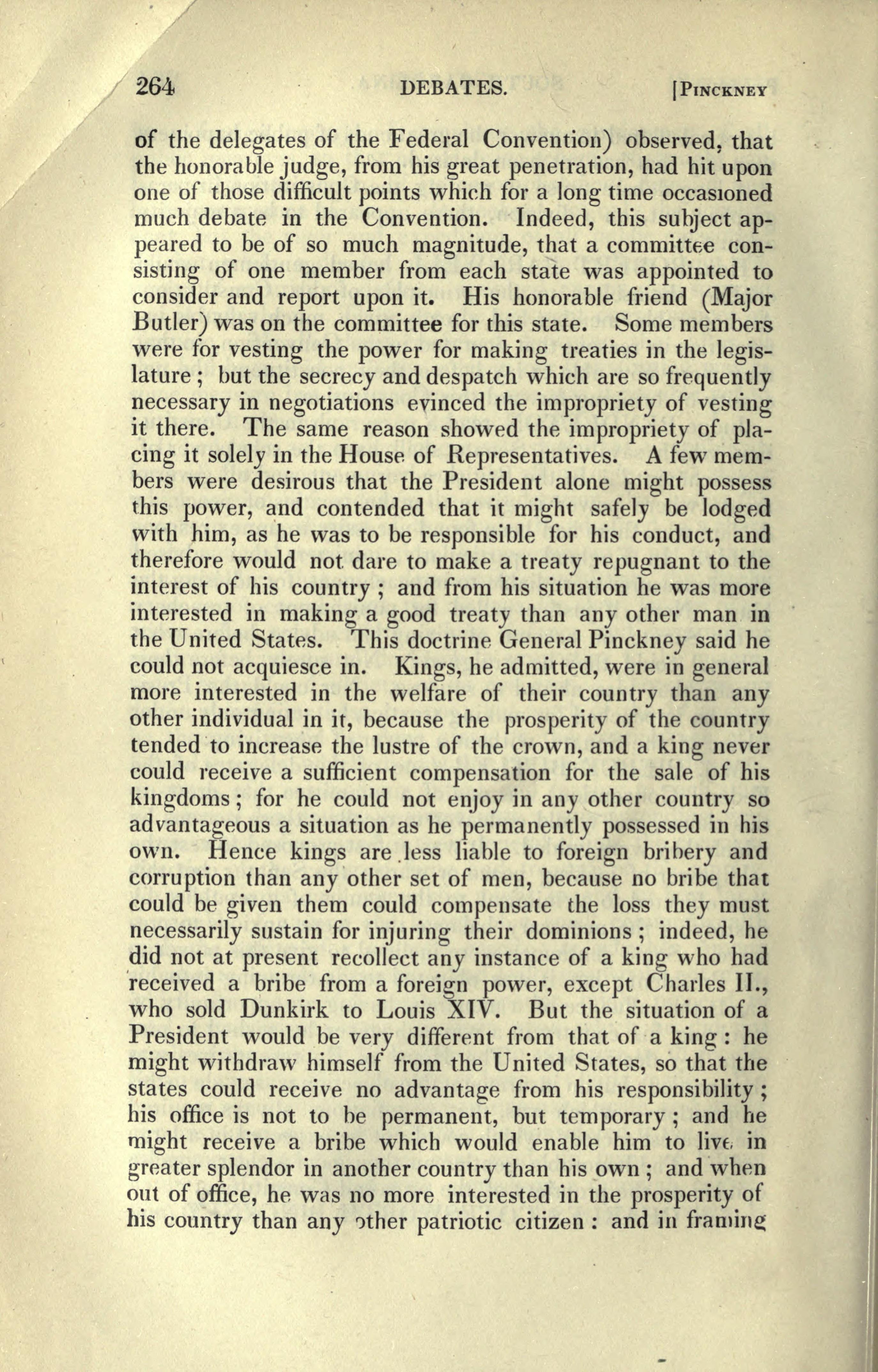
Gen. Charles Cotesworth Pinckney argues a President, unlike a king, could take a foreign bribe and simply leave the country, recalling "Charles II, who sold Dunkirk to Louis XIV."
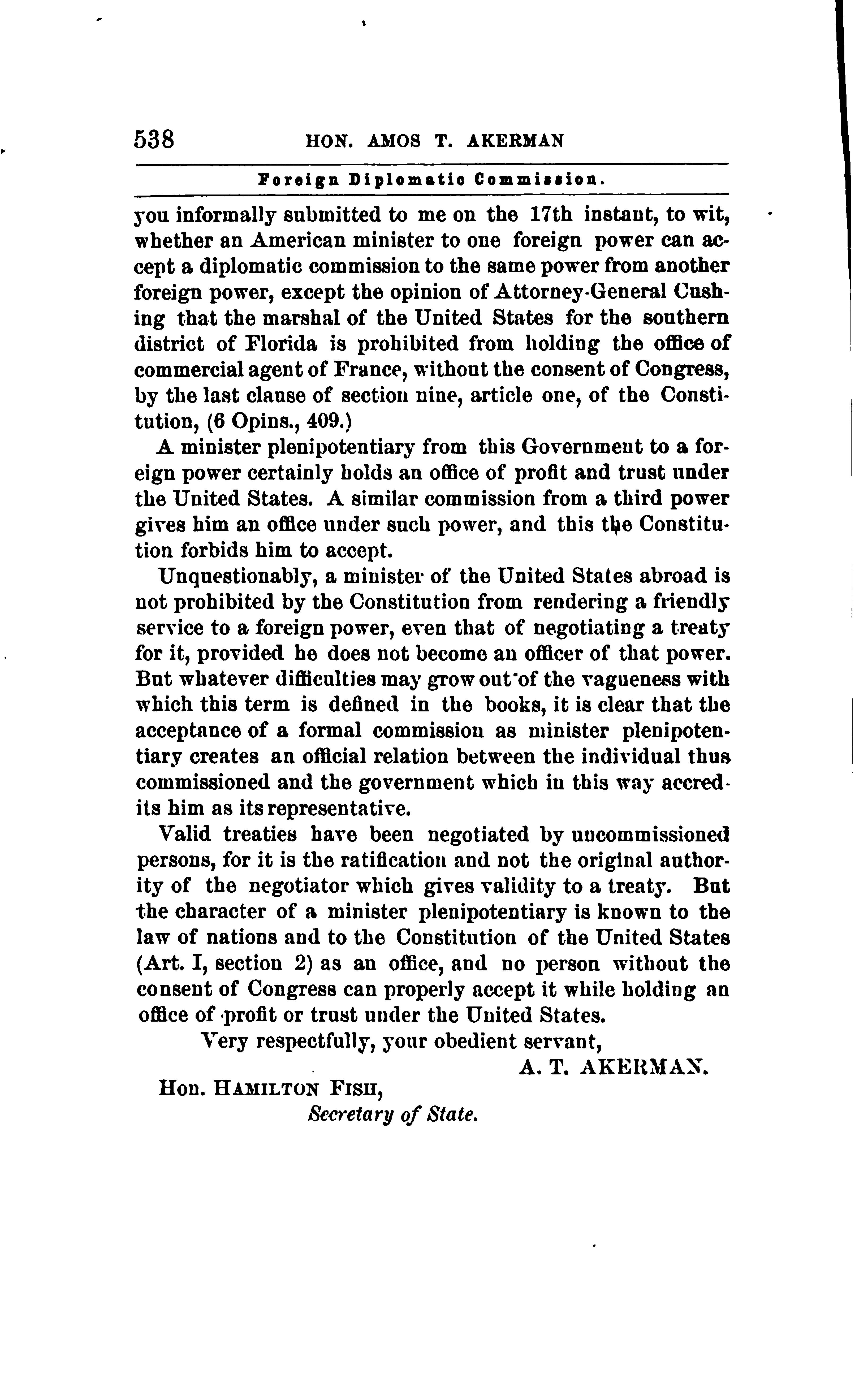
A U.S. minister abroad may do a foreign power a friendly service, even help negotiate a treaty, but may not accept a formal commission as that power’s own minister, because that makes him its officer.